Drainage
How Gutters Help Protect Roof Edges During Heavy Rain
Drip edge, gutter, downspout, ground: the four links that keep a heavy rain away from fascia, walls and foundations.
· 5 min read · Cape May Roofing Experts
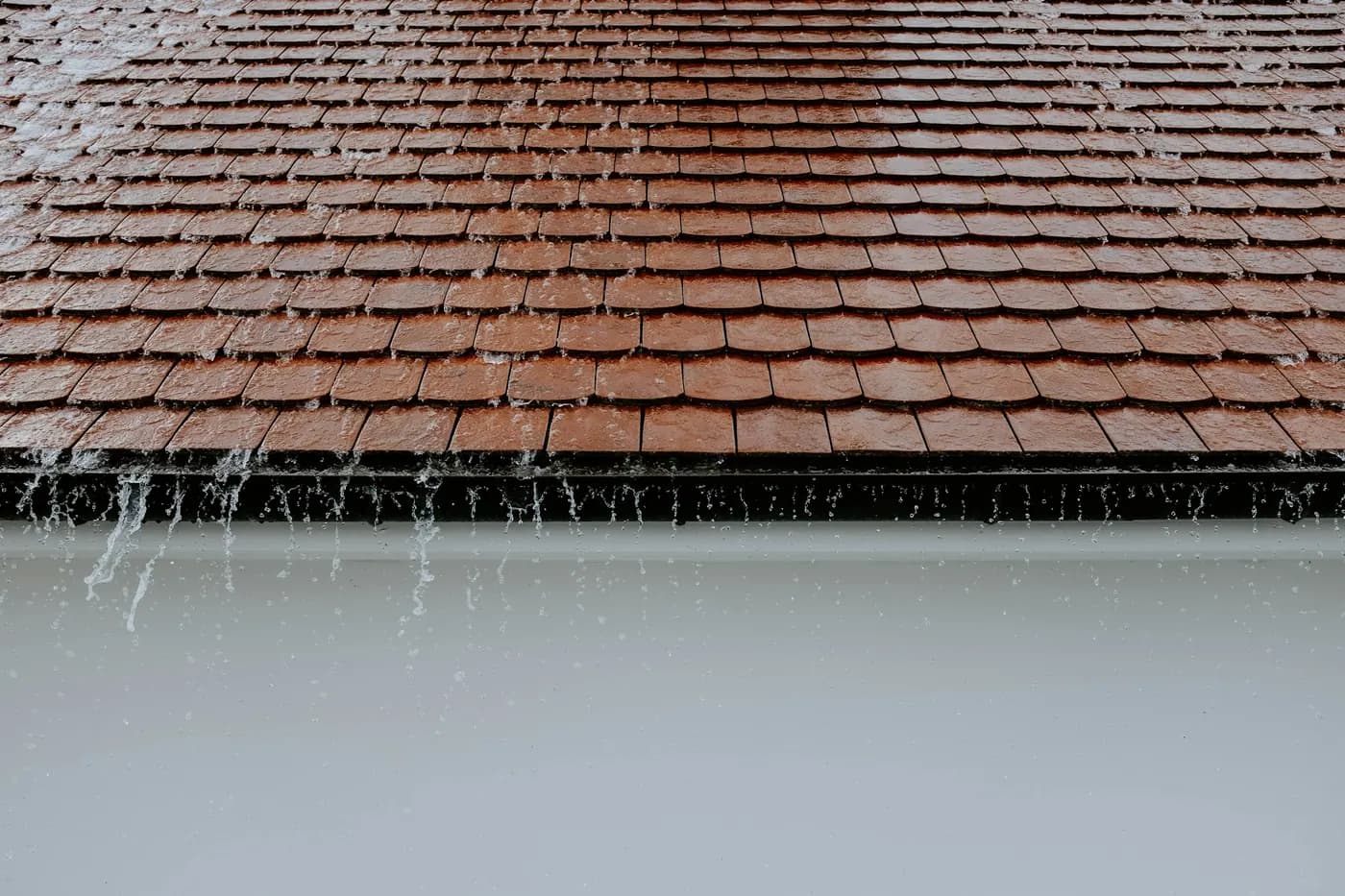
Photo: Adrien Olichon / Unsplash (Unsplash License). Credits
When West Cape May recorded 9.53 inches of rain during Hurricane Sandy in 2012 — the most anywhere in New Jersey — every gutter in the borough was tested. Most rain is gentler, but the same chain of parts decides where the water goes.
The four links
- Drip edge: carries water off the roof and into the gutter, not behind it.
- Gutter: sized for the roof area and pitched toward the outlets.
- Downspouts: enough of them, large enough, free-flowing.
- Discharge: water delivered away from the foundation, walkways and neighbours.
What overflow does
Water spilling over the back of a gutter soaks the fascia and can reach the roof deck edge and the top of the wall. Over time the fascia rots, gutter hangers lose their grip, and stains appear on ceilings near exterior walls — often mistaken for a roof leak.
Common causes of overflow
- Debris — leaves, needles, wind-blown sand
- Gutters sagging or pitched away from outlets
- Too few downspouts on long runs
- Valleys dumping concentrated water into one corner
- Missing drip edge letting water run behind the gutter
Island lots and wooded lots
On tight island lots, discharge location matters for walkways and neighbours; near salt air, check hangers and fasteners for corrosion. On wooded mainland lots, debris is the main enemy and gutters may need clearing more than once a year.
The bottom line
Make sure every link — drip edge, gutter, downspout and discharge — can handle a real downpour, and keep them clear.