For a business, a roof leak is rarely just a repair — it is a closed room, damaged stock or an unhappy guest. Commercial roofing work here is largely about preventing that: regular inspection, keeping drainage working, and planning repairs and replacement around the business calendar.
Commercial roof concerns we hear about
- Leaks at rooftop units, curbs and pipe penetrations
- Water standing on the roof for days after rain
- Blistered, split or shrinking membrane
- Clogged drains, scuppers or overflowing gutters
- Leaks that appear only in wind-driven storms
- A roof reaching the end of its service life, with a season to plan around
Low-slope systems
Most commercial low-slope roofs are covered by a single-ply membrane (such as EPDM or TPO), a modified-bitumen system, or an older built-up roof. Each has its own seam method, flashing details and typical failure modes. The first step on any commercial job is identifying what is actually on the roof — sometimes more than one system, from different eras.
- Membrane surface
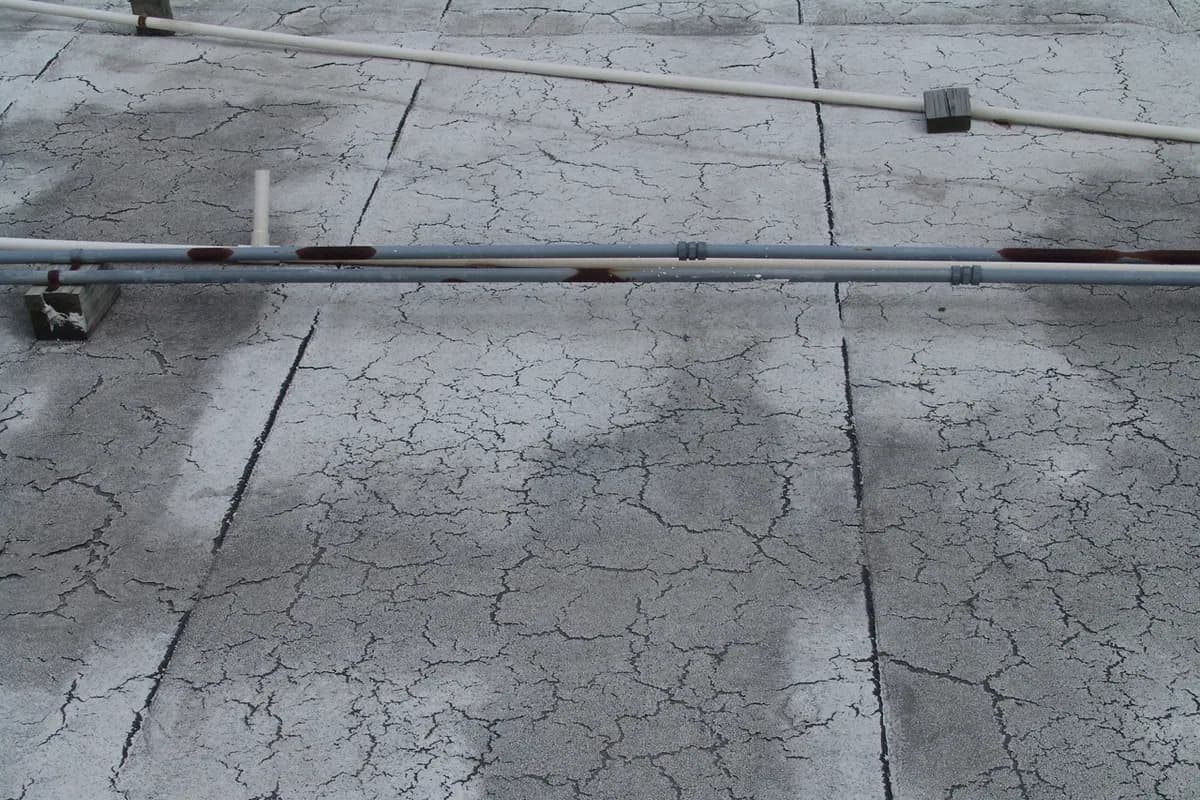
- Cracking, blistering, shrinkage pulling at edges and flashings, punctures from foot traffic or dropped tools.
- Seams and laps
- Open or failing seams are among the most common leak sources on single-ply and modified systems.
- Penetrations and curbs
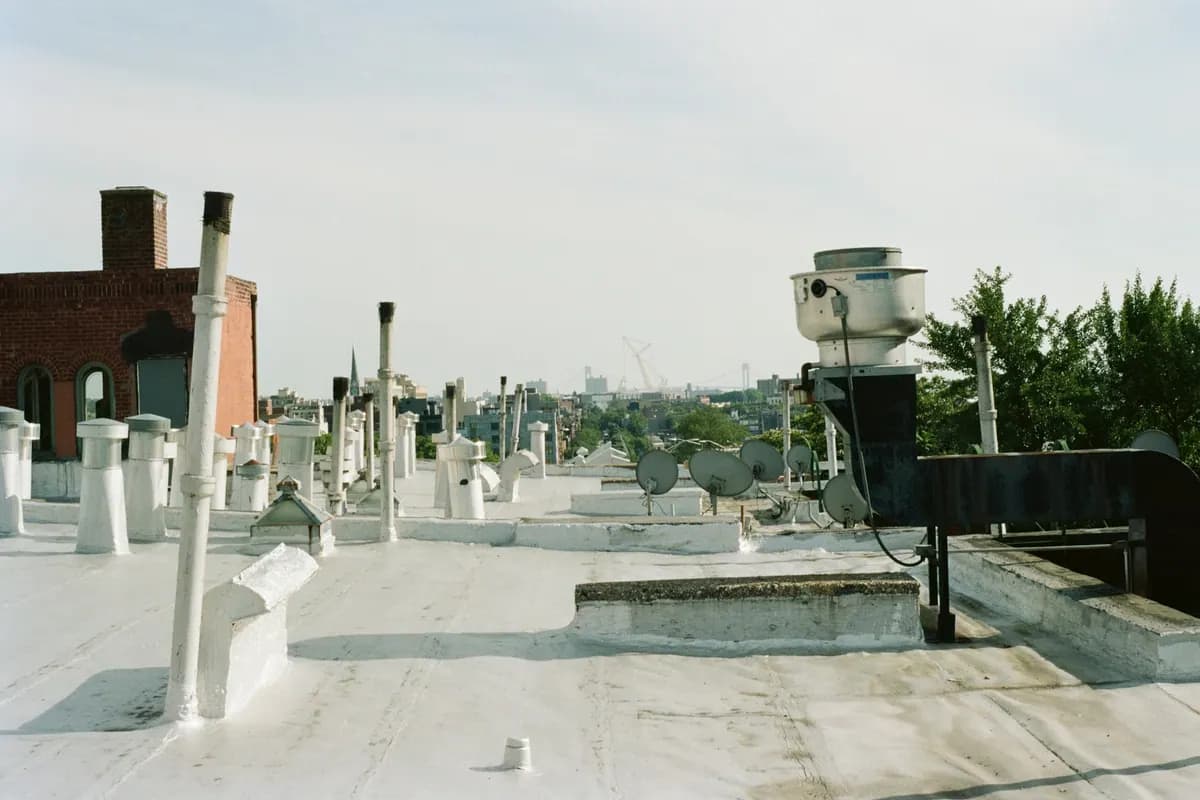
- HVAC curbs, exhaust fans, pipes and conduit supports all need properly flashed details.
- Perimeter and edges
- Edge metal, coping and parapet flashing resist wind and keep water out of wall assemblies.
- Drainage
- Drains, scuppers, gutters and downspouts must keep water moving; ponding accelerates deterioration.
Preventive inspection
Low-slope roofs reward routine attention. A scheduled inspection — commonly spring and autumn, plus after major storms — catches clogged drains, opened seams and damaged flashings while they are still small repairs.
Rooftop equipment servicing is a frequent cause of membrane damage. Knowing who has been on the roof, and checking afterwards, prevents slow leaks that are otherwise blamed on the weather.
Repair planning and replacement planning
Repair decisions on commercial roofs depend on how much of the roof is still sound and whether the insulation below has stayed dry. Wet insulation reduces thermal performance and can hide spreading damage, so part of an assessment is judging how far water has travelled.
When replacement is on the horizon, planning ahead lets the work fall in the off-season and allows time for budgeting, product selection, permits and coordination with tenants or equipment contractors.
- Identify the existing system(s) and any areas of wet insulation.
- Prioritise repairs that protect occupied or high-value spaces.
- Schedule replacement away from peak season where the business allows.
- Coordinate with HVAC contractors on curb and equipment work.
Cape May County
Working around a seasonal business year
In Wildwood, Ocean City, Sea Isle City and Cape May, many commercial buildings earn most of their revenue between Memorial Day and Labor Day. That makes late autumn, winter and early spring the natural time for larger roof work — which is also when nor'easters are most likely. Planning means leaving room for weather delays before opening day.
On the mainland, commercial buildings along Route 9, Route 47 and in Rio Grande and Cape May Court House tend to operate year-round, so work is scheduled around business hours instead of a season.
Questions about commercial roofing
What kinds of commercial buildings do you work on?
Storefronts, offices, restaurants, multi-unit residential buildings, motels and other small-to-mid-size commercial buildings with low-slope or mixed roofs. Tell us about the building and roof and we will say plainly whether it is a good fit.
Water sits on our flat roof after rain. Is that a problem?
Water that remains long after rain — often described as ponding — speeds up wear on many membranes and adds load. It usually points to clogged drains, settled areas or insufficient slope. It is worth having looked at.
Can work be done while the business is open?
Often, yes. Staging, noise and access can be planned around hours of operation. Some tasks, like work over an entrance, may need temporary arrangements.
How often should a commercial roof be inspected?
Twice a year and after significant storms is a common routine for low-slope roofs, adjusted for the roof's age and how much rooftop equipment it carries.