Older homes
Roof Flashing Problems Around Chimneys and Dormers
Step, counter, apron and head flashing — how they are meant to work, why they fail on older houses, and why caulk is not a fix.
· 7 min read · Cape May Roofing Experts
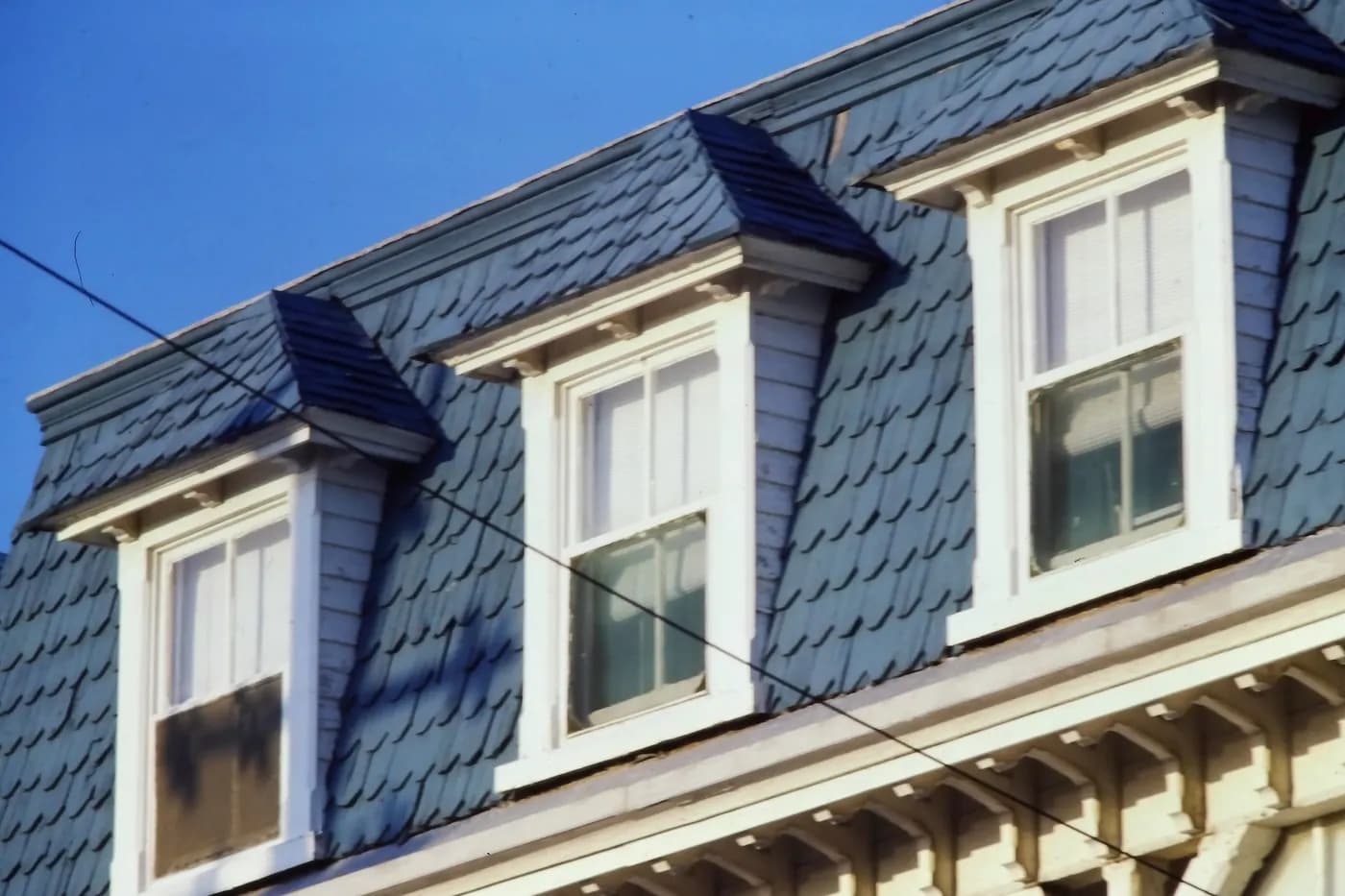
Photo: Bmzuckerman / Wikimedia Commons (CC BY 4.0). Credits
Wherever a roof meets something that sticks up through it — a chimney, a dormer, a wall — the shingles alone cannot keep water out. Flashing does that job. On houses with many dormers and chimneys, like the Victorian cottages of Cape May, flashing is where most leaks begin.
The pieces and their jobs
- Step flashing: individual L-shaped pieces woven with each shingle course up the side of a chimney or dormer wall.
- Counter flashing: covers the top of the step flashing, let into the masonry or tucked behind siding.
- Apron flashing: across the downhill face of a chimney or dormer.
- Head (back) flashing and crickets: on the uphill side, where water collects against the obstruction.
- Dormer cheek and head flashing: along the sides and top of a dormer.
How it fails
- Mortar joints holding counter flashing crumble, and the flashing pulls out.
- Sealant used instead of proper laps cracks as materials move.
- Step flashing reused on a previous re-roof has corroded or been bent.
- Debris builds up on the uphill side of a wide chimney without a cricket.
- Siding or trim installed over dormer flashing traps water instead of shedding it.
Signs of a flashing leak
Stains on the ceiling or wall beside a chimney breast; damp wood around a dormer window; staining that appears in wind-driven rain; tar or caulk smeared along a chimney or dormer — usually a sign of earlier attempts.
What a lasting repair involves
- Remove old patching and the shingles along the affected detail.
- Check the deck and framing for water damage.
- Install new step flashing course by course, with apron and head pieces.
- Install counter flashing properly into masonry or behind siding.
- Where water pools uphill of a wide chimney, consider a cricket.
- Assess masonry if the chimney itself is deteriorating.
Historic districts
On houses in designated historic districts, such as the City of Cape May, changes to visible materials can be subject to local review. Check with the municipality before altering what the flashing or chimney looks like.
The bottom line
Chimney and dormer leaks are usually flashing leaks; rebuild the laps properly rather than adding more sealant.