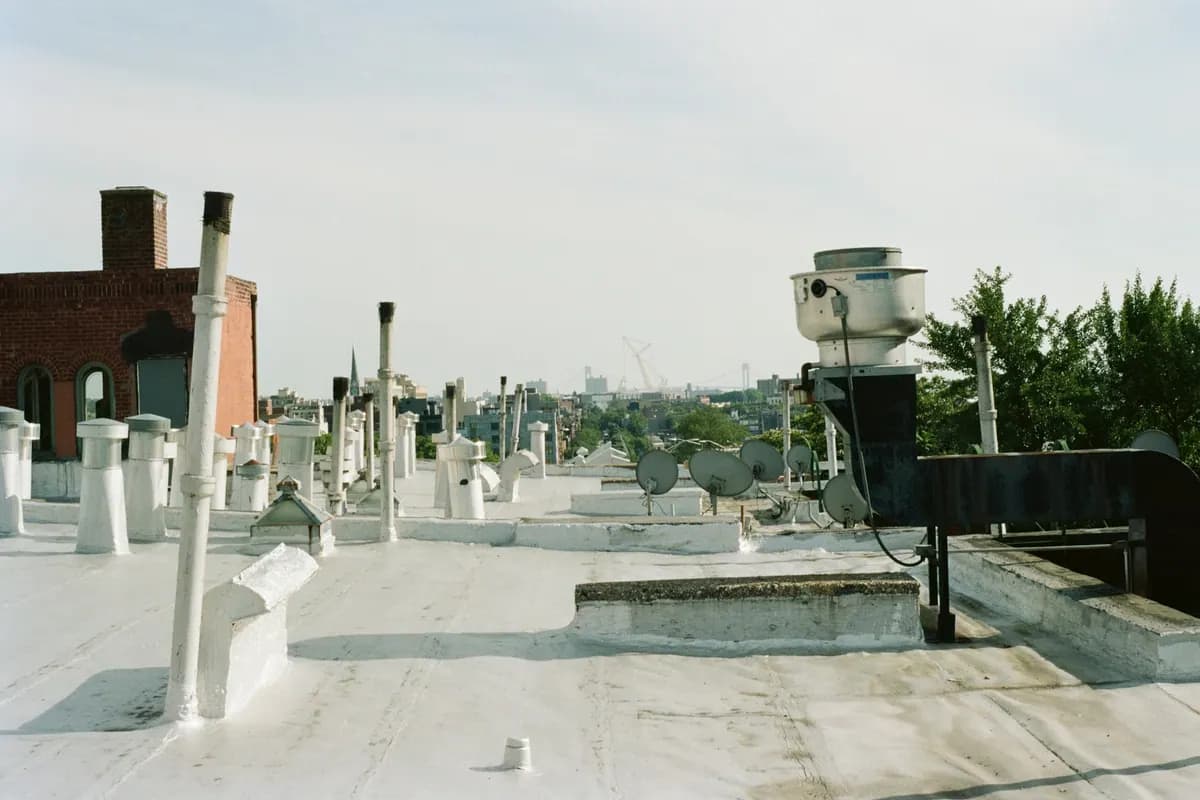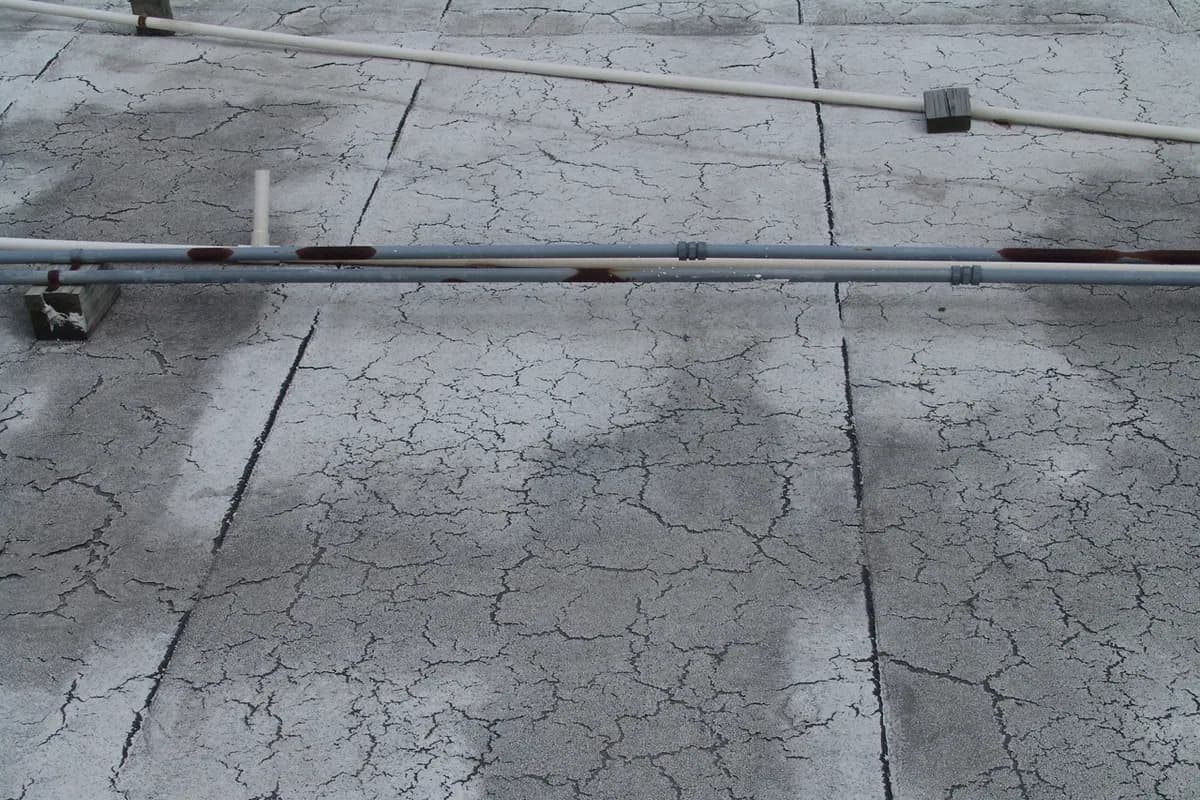
Low-slope roofs turn up all over the county: rear additions and porch roofs on shore cottages, roof decks over living space, garages, and a large share of commercial buildings. Not every shore house has one, but many have at least a section.
Signs a low-slope roof needs attention
- Puddles that remain a day or two after rain
- Cracking, crazing or blistering in the membrane surface
- Seams that have lifted or opened
- Membrane pulling away from walls, curbs or edges
- Leaks below a roof deck, railing post or rooftop unit
- Drains or scuppers choked with debris
What we examine on a low-slope roof
Low-slope roofs fail in predictable places. An inspection follows the water and the joints.
- Membrane condition
- Cracking, surface erosion, blisters, shrinkage and punctures.
- Seams
- Laps between sheets must be fully bonded; an open seam is a direct path for water.
- Ponding
- Where water collects and stays, deterioration speeds up and loads increase.
- Roof drains
- Strainers clear, drain bodies sealed to the membrane, lines flowing.
- Scuppers and edges
- Openings through parapets or edges sized and kept clear; edge metal secure.
- Penetrations
- Pipes, vents, curbs and railing posts flashed with details suited to the membrane.
- Wall flashing
- Where the roof turns up a wall, the flashing height and termination keep water out of the wall assembly.
Ponding water and drainage
Standing water is the single most useful clue on a low-slope roof. It can come from clogged drains or scuppers, from a deck that has deflected or settled, from insulation that has compressed, or from a roof that was built with too little slope to begin with.
The fix depends on the cause: clearing and maintaining drains, adding or enlarging scuppers, adding tapered insulation to build slope during replacement, or correcting framing issues. Simply patching the membrane in the wet area treats the symptom.
Repair or replace a flat roof
Seams, penetrations and localised damage are usually repairable if the membrane around them is still sound. If the membrane is brittle or cracked across much of its surface, or the insulation beneath has become wet over a wide area, replacement is typically the longer-lasting answer.
Replacement is also the chance to improve drainage, upgrade edge details and choose a membrane system suited to how the roof is used — a roof deck with foot traffic has different needs from a roof nobody walks on.
Roof decks over living space
Many shore homes have decks built over a room below. These combine a waterproofing membrane with a walking surface, railings and door thresholds — all points where water can get in. Leaks from these assemblies are often traced to railing post penetrations, door sills or the transition where the membrane meets the house wall.
Deck surfaces laid over a membrane usually have to be lifted to repair the membrane beneath. Plan for that when budgeting.
Cape May County
Low-slope roofs in a wet, windy setting
Wind-driven rain and heavy downpours test low-slope drainage hard: a drain that copes with steady rain can be overwhelmed when a thunderstorm dumps water quickly or wind blows leaves and sand into strainers. Keeping drains and scuppers clear before storm season is simple and effective.
Near the ocean, metal components at the edges and drains — edge metal, fasteners, scupper boxes — are also worth checking for corrosion as part of routine inspection.
Questions about flat roofing
How long should water stay on a flat roof after rain?
A common rule of thumb in the industry is that water should drain within about 48 hours in good drying weather. Water that consistently lingers longer is worth investigating.
Can you repair just the leaking spot?
Often, if the membrane around it is still in good condition. If the membrane is failing broadly, spot repairs tend to multiply, and replacement is worth discussing.
My roof deck leaks into the room below. Where do you start?
Usually at the penetrations and transitions — railing posts, the door threshold and the wall flashing — then the field of the membrane beneath the walking surface.