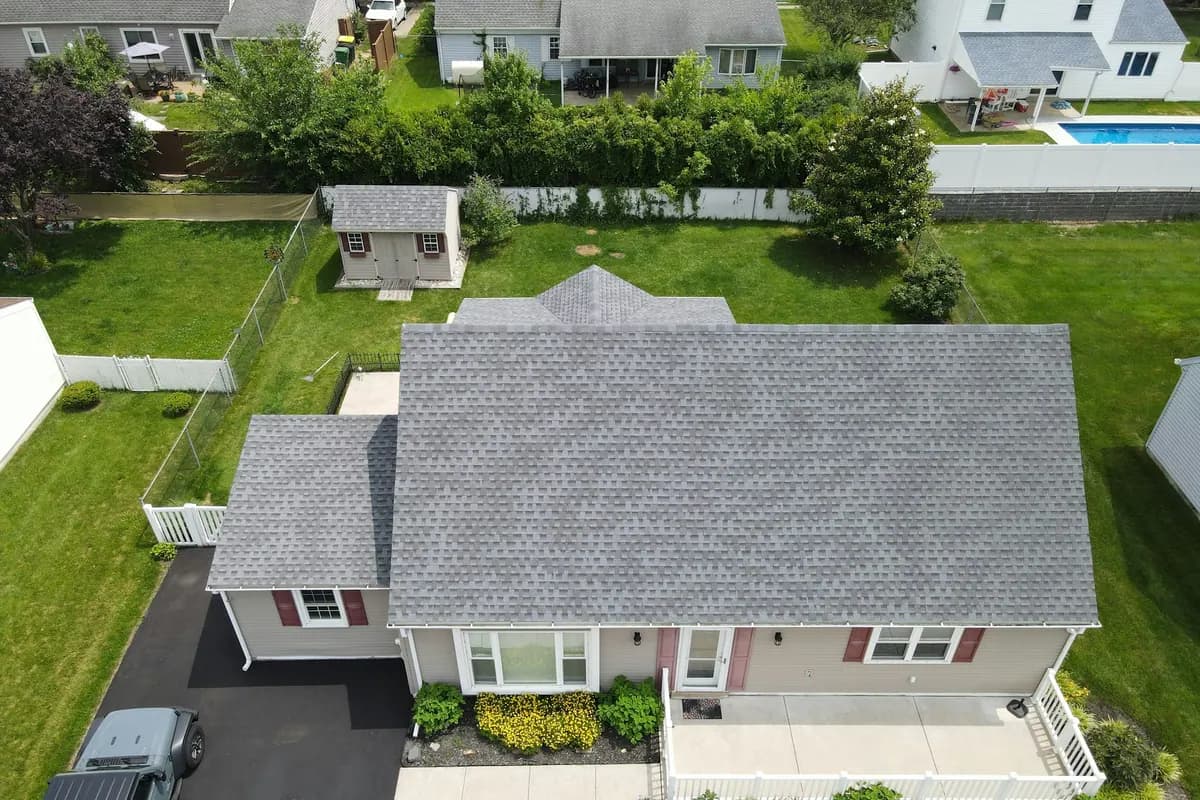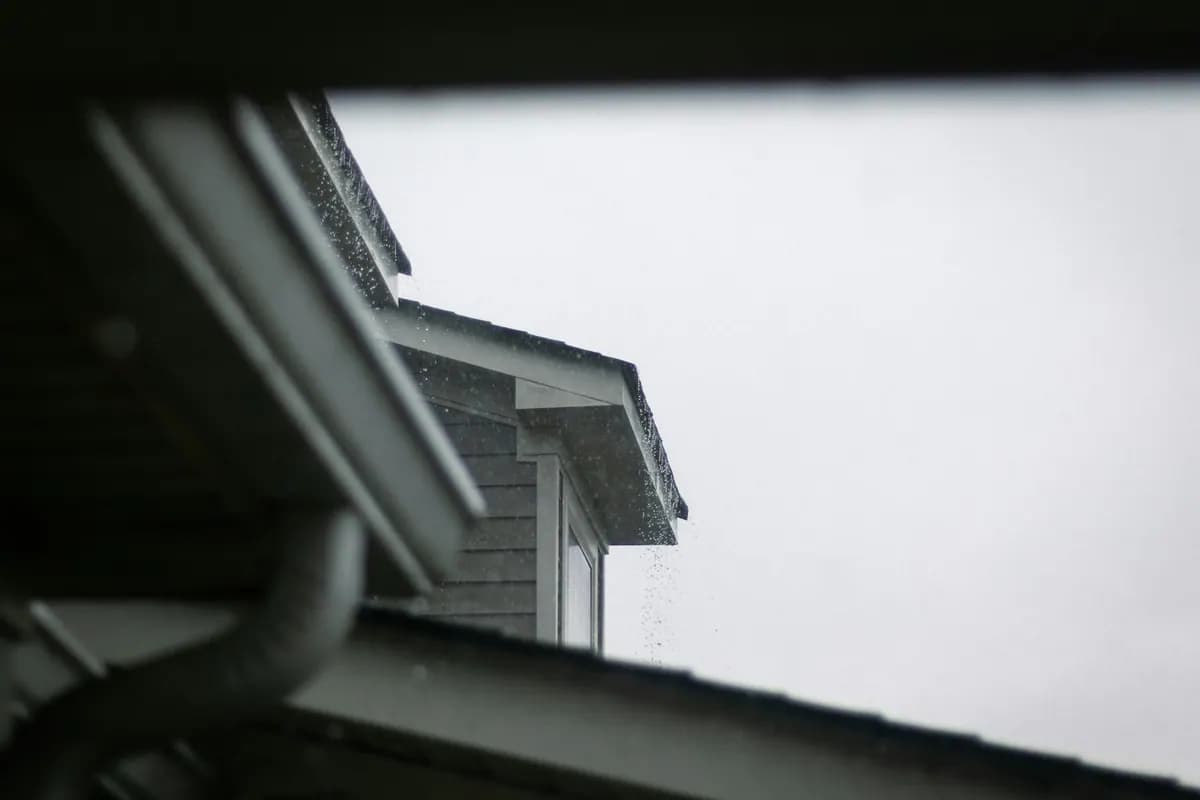
We treat gutters as part of the roof's drainage, because that is what they are. Many roof-edge leaks and rotted fascia boards begin as gutter problems.
Gutter problems that affect the roof
- Water pouring over the front of the gutter in heavy rain
- Gutters sagging, or pulling away from the fascia
- Staining or peeling paint on fascia and soffits
- Leaking seams, end caps or corners
- Downspouts discharging against the foundation
- Corroded hangers or fasteners on older runs
How water should move at the roof edge
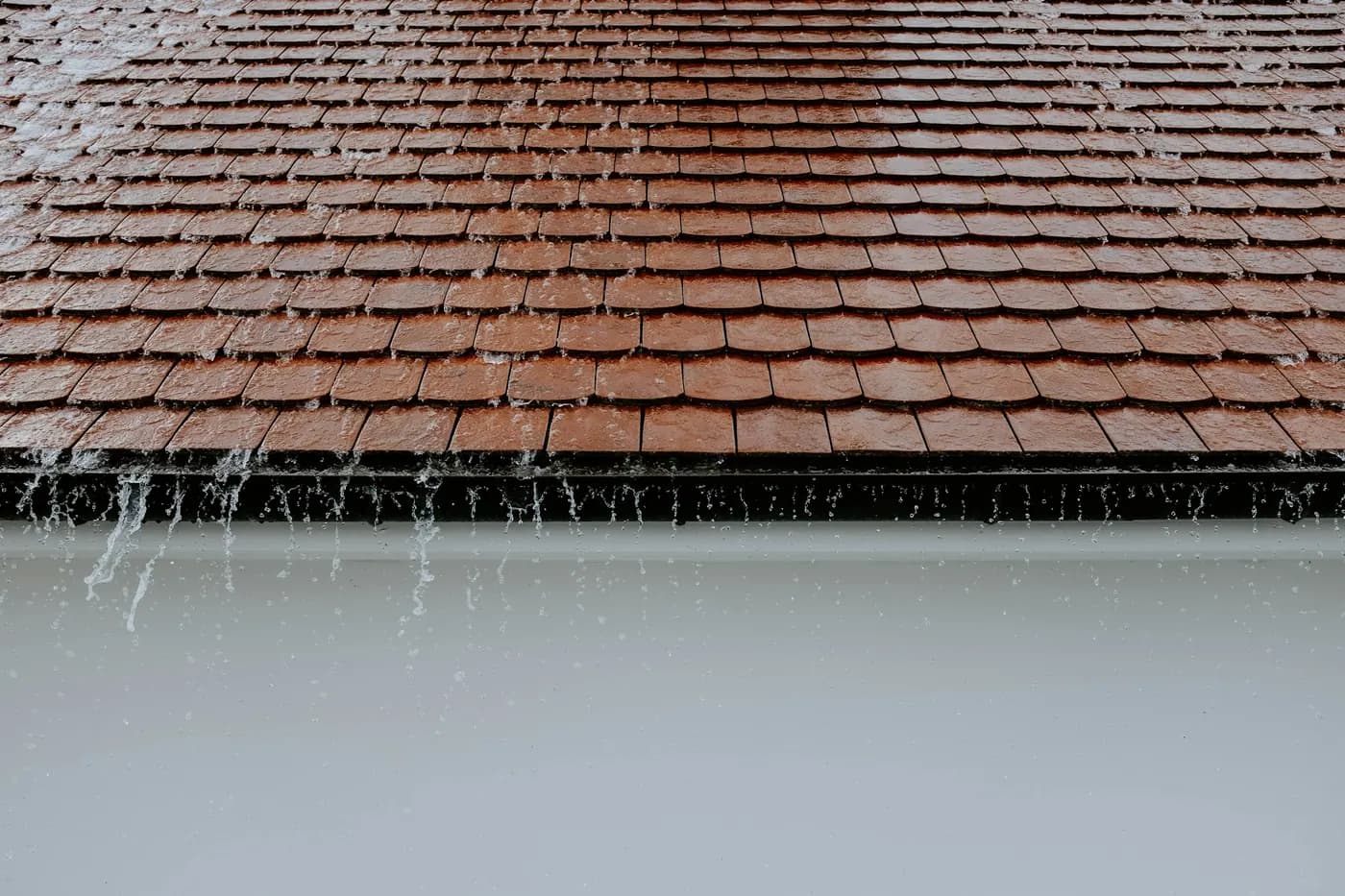
Water runs down the roof, off the shingles and drip edge, and into the gutter. The gutter slopes gently toward a downspout, which carries the water to the ground and away from the house. Every link matters: missing drip edge lets water run behind the gutter; flat or back-pitched runs hold water; a single small downspout on a long run cannot keep up in a downpour.
Repair, adjustment or replacement
Many gutter issues are fixable without replacing the whole system.
- Re-pitching runs that hold standing water
- Re-securing hangers and replacing failed ones
- Resealing or replacing leaking seams, corners and end caps
- Adding or relocating downspouts on long runs
- Extending downspout discharge away from foundations
- Replacing damaged sections, or whole runs where corrosion or damage is widespread
Fascia and roof-edge damage
When a gutter has overflowed for a long time, the fascia board behind it and sometimes the roof deck edge above it can rot. That is worth repairing before new gutters are hung, since hangers need solid wood to hold.
Debris and storm preparation
Leaves, pine needles, seed pods and — near the beach — wind-blown sand all collect in gutters. Clearing them before storm season, and after leaf fall on wooded lots, is the simplest way to keep water moving when it matters most.
Gutter guards reduce cleaning but do not eliminate it, and some styles struggle with fine debris such as pine needles. Choose based on what actually falls on the roof.
Cape May County
Drainage on the islands and on the mainland
On the barrier islands, lots are often small and houses close together, so where downspouts discharge matters — onto walkways, a neighbour's side yard or a driveway. Metal gutter components near salt air are also worth checking for corrosion at fasteners and seams.
On mainland lots in Upper, Dennis and Middle Townships, tree debris is the main enemy. Gutters under pines and oaks may need clearing more than once a year.
Questions about gutter services
Why do my gutters overflow even though they are clean?
Common causes are runs that are too long for one downspout, downspouts that are too small, gutters pitched the wrong way, or roof valleys that dump concentrated water into one corner. Each has a straightforward fix once identified.
Can gutter problems cause roof leaks?
Yes. Water backing up or spilling behind a gutter can wet the fascia, the roof deck edge and the wall below, which can look like a roof leak inside.
Do you only do gutters as part of roof work?
No — gutter repair and replacement can be done on their own. Where the roof edge or drip edge is part of the problem, we will say so.