Low-slope roofs
Flat Roof Drainage Problems Near the Shore
Why low-slope roofs hold water, how sand and debris make it worse near the beach, and which fixes actually work.
· 6 min read · Cape May Roofing Experts
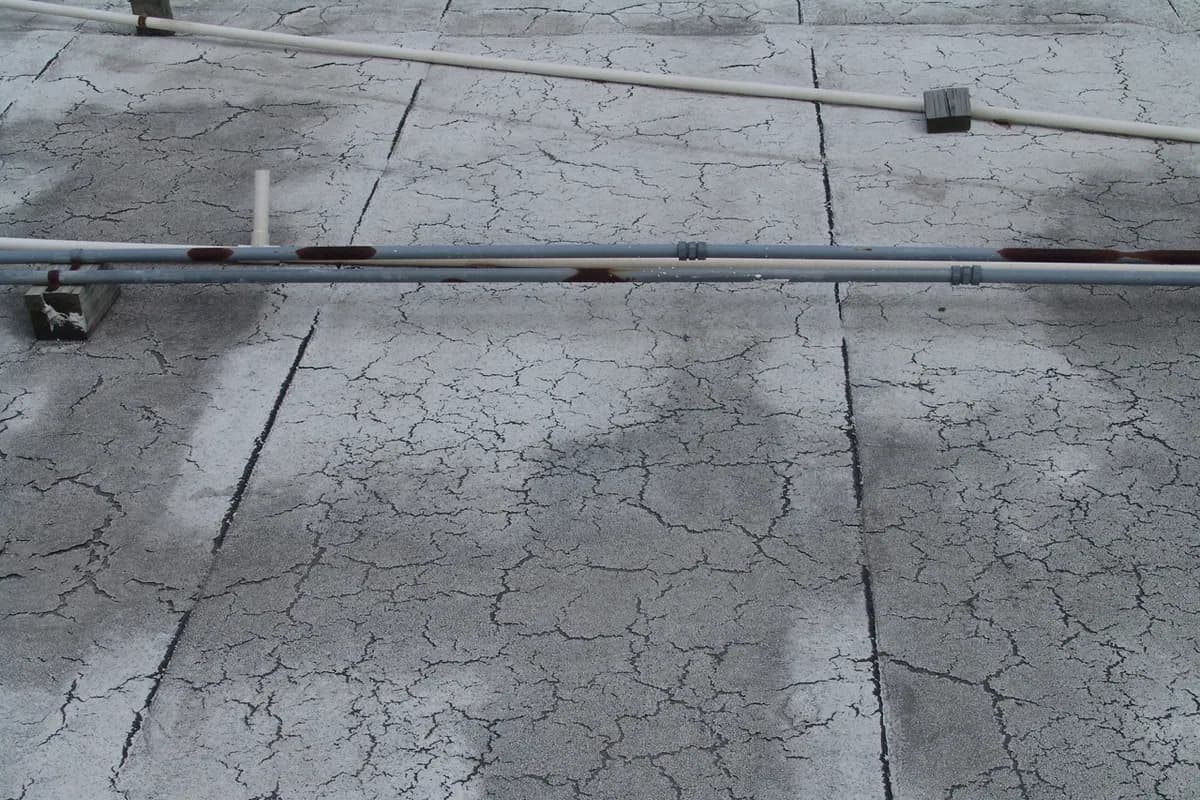
Photo: GRALISTAIR / Wikimedia Commons (CC BY-SA 4.0). Credits
Low-slope roofs are common across Cape May County — on porches and additions, roof decks, motels, storefronts and multi-unit buildings. Almost every problem they have is connected to one thing: water that stays when it should leave.
Where the water should go
A low-slope roof is built with a gentle slope toward internal drains, scuppers through parapets, or an edge with gutters. A widely used rule of thumb is that water should be gone within about 48 hours in good drying weather.
Why water lingers
- Clogged drain strainers or scuppers — near the beach, often with sand
- Low spots where the deck or insulation has settled
- Too little slope designed in
- Drains set higher than the surrounding membrane
- Rooftop equipment or curbs blocking flow
Why ponding matters
Standing water accelerates wear on many membranes, collects dirt and debris, adds weight, and turns a small seam gap into a steady leak. Wind also drives ponded water under edges and into flashing.
Fixes that match the cause
- Clear and maintain drains and scuppers — before storm season and after storms.
- Correct low spots locally where possible.
- Add or enlarge scuppers and drains where capacity is short.
- On replacement, use tapered insulation to build positive slope.
- Relocate or re-curb equipment that blocks flow.
The bottom line
Water that stays on a low-slope roof is the problem to solve; clear the drains first, then fix the slope or capacity that lets it linger.