Seasonal homes
Roof Maintenance for Seasonal Shore Homes
A simple calendar for owners who are not there all year — and the access plan that makes it work.
· 6 min read · Cape May Roofing Experts
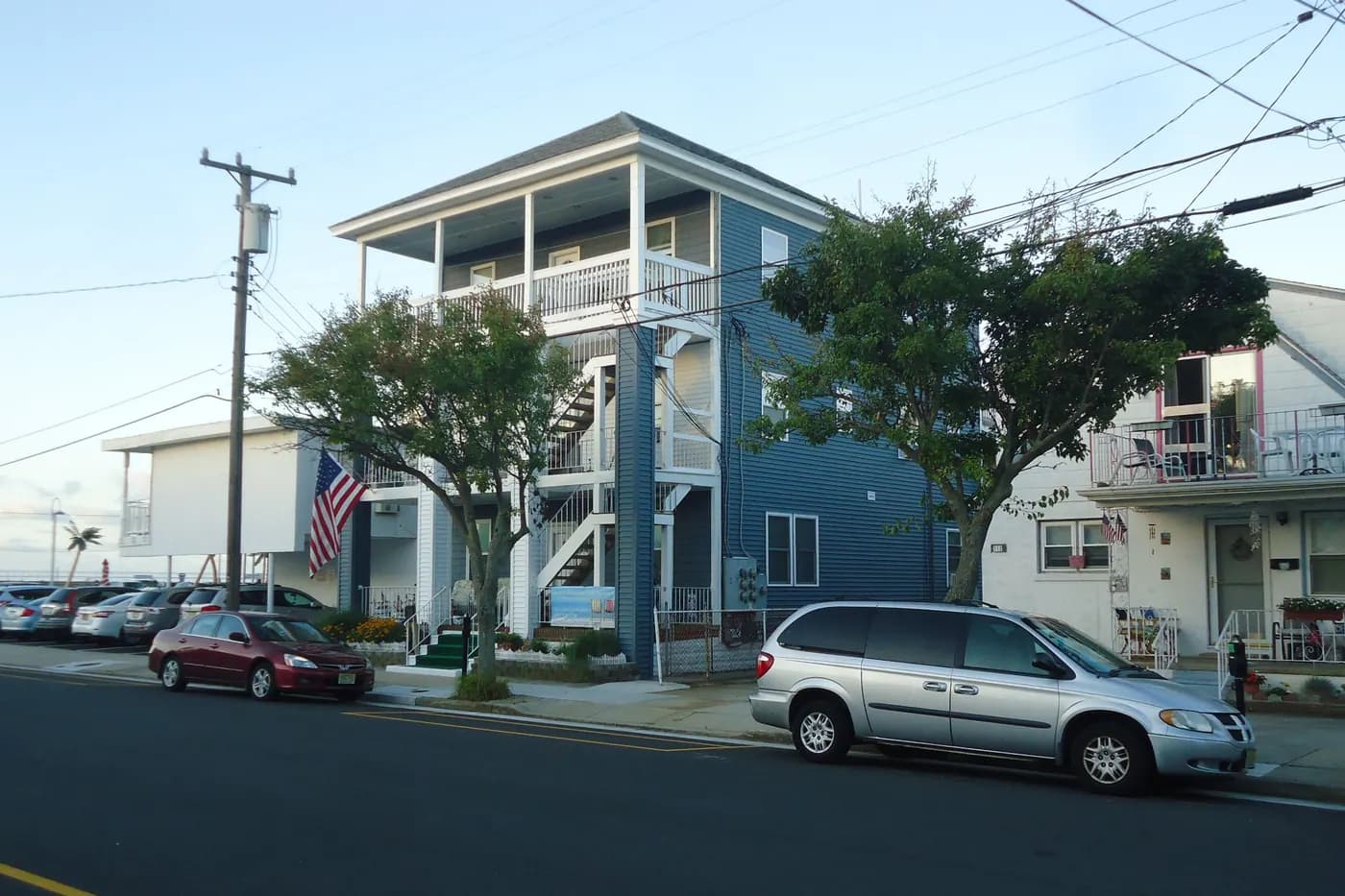
Photo: Tomwsulcer / Wikimedia Commons (CC0). Credits
In many Cape May County shore towns, most homes are empty on any given winter day. In the 2020 census, about three in four housing units in Ocean City and Wildwood Crest, and more than four in five in Sea Isle City, were counted as vacant — a category that includes seasonal homes.
A roof on an empty house has nobody to notice the first drip. The answer is not more worry; it is a routine.
A roof calendar for the year
- March–April: inspection before occupancy; clear gutters and scuppers; check pipe boots, flashing and roof-deck drains.
- May: fix anything found in spring before the first guests.
- Summer: ask renters or managers to report stains, drips or musty smells.
- September–October: gutters cleared again; loose items secured before storm season.
- After any major storm, any month: exterior check with photos.
Decide the access plan now
Most problems with absentee properties are logistics, not roofing. Before storm season, decide:
- Who holds keys and can let a contractor into the house and attic.
- Who can approve emergency temporary protection if you cannot be reached.
- Where the attic access is, and whether it is blocked by stored items.
- How you want findings and photos sent to you.
Signs a manager or renter should report
Give whoever is at the house a short list:
- Any new ceiling or wall stain, however small
- Drips during rain, or damp carpet near exterior walls
- A musty smell in upper rooms
- Shingles or metal pieces in the yard
- Gutters overflowing in ordinary rain
Rentals: timing repairs
Mid-season leaks are best handled with a quick, safe temporary fix and a permanent repair at the next changeover. Larger work belongs in spring or autumn.
What routine does not replace
Scheduled checks reduce surprises; they cannot guarantee a roof will not leak in an extreme storm. What they do is shorten the time between a problem starting and someone knowing about it.
The bottom line
Inspect before the season, clear gutters twice a year, check after big storms, and settle the access plan before you need it.